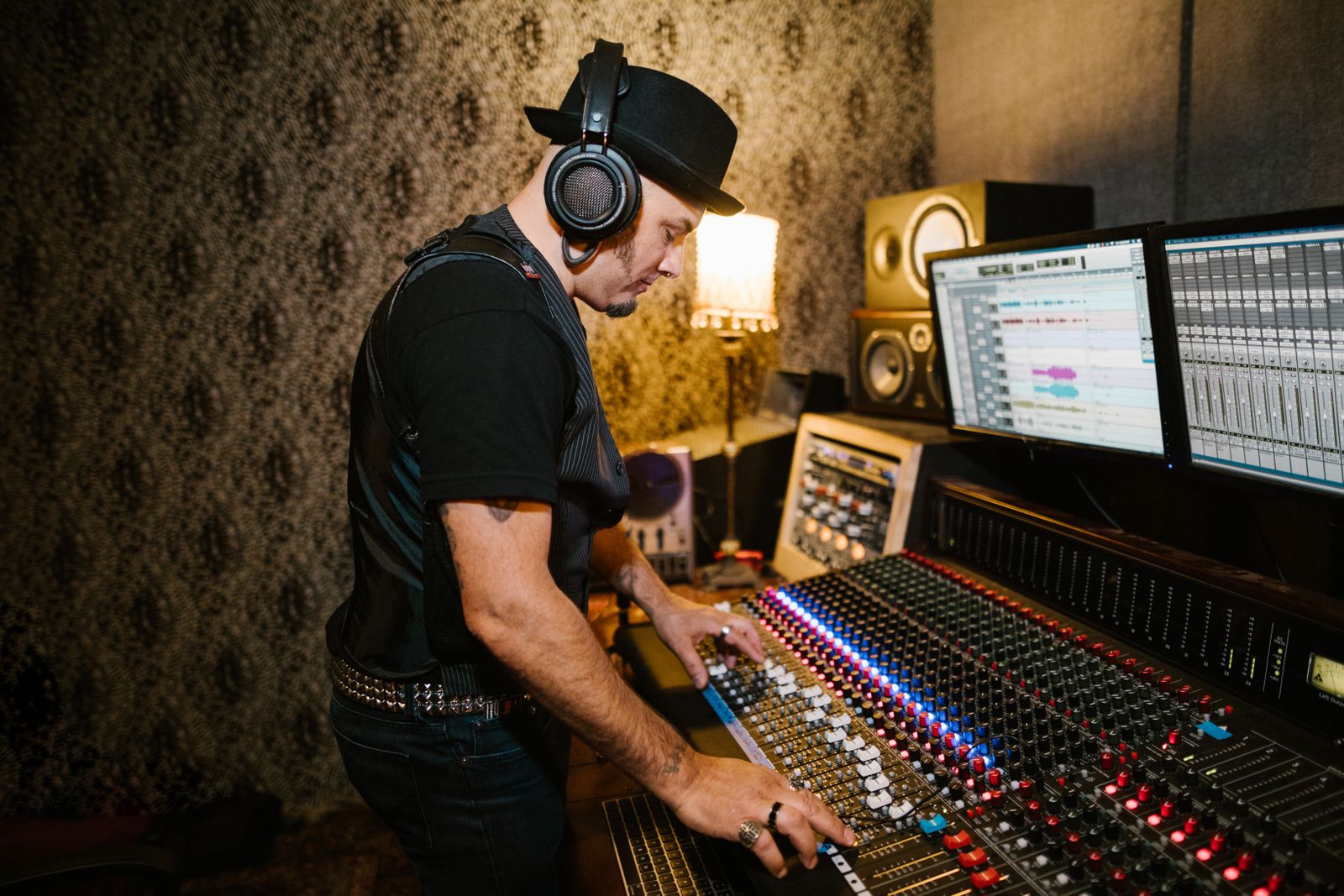
"AI audio tool" covers more ground than almost any other category on this site. Under one label you'll find software that writes and performs an entire song from a text prompt, software that clones a human voice well enough to read a script no one ever actually spoke, and software that just quietly removes background noise from a call. These aren't variations on the same idea — they solve completely different problems, and the tool that's best at one does almost nothing useful for the others.
This pillar maps out the category the way it actually breaks down in practice: music generation, voice cloning and text-to-speech, and audio cleanup/production. Each has its own deep-dive comparison linked below — this page is here to help you figure out which of those three jobs you actually have before you go pick a tool for it.
In this article
- Quick Comparison
- If you want a finished song from a prompt: Suno, Udio, AIVA, Boomy
- If you need a voice speaking, not a song: ElevenLabs, Murf AI
- If the audio already exists and needs cleanup or editing: Descript, Krisp
- Frequently Asked Questions
- Can I release AI-generated music commercially?
- Is cloned voice audio legal to use?
- Do I need any musical training to use AI music generators?
- How natural does AI voice actually sound now?
- What's the difference between Krisp and just using noise-cancelling headphones?
- Final Verdict
Quick Comparison
| Tool | Category | Best for | Standout feature | Free tier |
|---|---|---|---|---|
| Suno | Music generation | Full songs with vocals from a prompt | Coherent lyrics + vocal melody together | Limited free songs |
| Udio | Music generation | Genre-accurate, radio-ready output | Strong production quality per genre | Limited free songs |
| AIVA | Music generation | Instrumental/orchestral scoring | Fine control over mood and structure | Limited free credits |
| ElevenLabs | Voice cloning / TTS | Realistic narration and cloned voices | Widely regarded as the most natural-sounding TTS | Limited free characters |
| Descript | Audio editing/production | Podcast and voiceover editing | Edit audio by editing a text transcript | Limited free minutes |
If you want a finished song from a prompt: Suno, Udio, AIVA, Boomy
This is the loudest corner of the category right now, and for good reason — Suno and Udio can both turn a short text description into a complete song with vocals, lyrics, and instrumentation in under a minute. The two are closer to each other than either is to anything else on this list, and the honest difference between them comes down to taste rather than one being objectively better.
Suno tends to produce more coherent lyrical structure and vocal melody — verses and choruses that actually follow a song-like arc rather than sounding generated section by section. Udio has generally earned a reputation for genre accuracy and production polish, especially on anything leaning toward pop, hip-hop, or electronic — output that sounds closer to a finished, radio-mixed track straight out of the tool.
- Both let you steer style with a genre/mood description rather than requiring music theory knowledge
- Both currently work best for shorter, single-take songs rather than album-length coherent bodies of work
- Neither is a replacement for a human songwriter or producer chasing a very specific creative vision — they're strongest as a starting point or for high-volume background/content use
The music generation gap has closed faster than almost any other AI category — the honest question in 2026 isn't "does this sound like AI," it's "does this sound like the specific song I actually wanted."
AIVA plays a different role entirely — it's built around instrumental and orchestral composition rather than vocal songs, with more granular control over mood, structure, and instrumentation. It's the stronger pick for film/game background scoring or any use case where you need instrumental music matched precisely to a mood or scene, rather than a standalone song.
Boomy leans toward accessibility and speed over creative depth — genuinely useful if you want background tracks or simple original music quickly and don't need fine control, but it generally can't match Suno or Udio's output quality on anything meant to stand as a lead piece of content.
If you need a voice speaking, not a song: ElevenLabs, Murf AI
Text-to-speech and voice cloning solve a completely separate problem — turning written text into spoken audio, either in a stock voice or a cloned likeness of a real one. ElevenLabs has become close to the default here specifically because of how natural its output sounds — the pacing, emotional inflection, and breath patterns read as genuinely human rather than the flat, robotic delivery that defined this category just a few years ago.
Murf AI targets a slightly different audience — voiceover work for presentations, e-learning, and corporate video, with a large library of stock voices and simpler studio-style controls (pacing, emphasis, pronunciation) built for non-technical users rather than developers integrating via API. It's generally the more approachable entry point if you just need narration for a video, not a cloned voice or an API integration.
- ElevenLabs: best raw naturalness and emotional range, strong developer API
- Murf AI: best for non-technical narration/voiceover work, large stock voice library
- Both support multiple languages, though depth and accent quality vary by language
If the audio already exists and needs cleanup or editing: Descript, Krisp
Descript takes a genuinely different approach to audio (and video) editing — it transcribes your recording and lets you edit the audio by editing the text transcript, deleting a sentence from the document deletes it from the recording. That's a real workflow shift for podcast editing and voiceover cleanup, especially for people who find a traditional waveform timeline intimidating or slow.
Krisp solves a narrower but genuinely common problem: real-time background noise and echo cancellation during live calls and recordings. It's less a creative tool than an invisible fix — the goal is that listeners never notice it worked at all, just that the audio sounds clean.
Frequently Asked Questions
Can I release AI-generated music commercially?
It depends on the tool and your specific plan — paid tiers on tools like Suno and Udio generally grant broader commercial rights than free tiers, but ownership and licensing terms for AI-generated music are still evolving and vary by platform. Check the current terms of service for the specific tool and plan before releasing or monetizing generated music.
Is cloned voice audio legal to use?
Using a voice you have explicit consent to clone (including your own) is generally fine under most tools' terms. Cloning someone else's voice without their permission raises real legal risk in many jurisdictions and is against most platforms' usage policies regardless of the law — don't assume it's fine just because the technology allows it.
Do I need any musical training to use AI music generators?
No — tools like Suno, Udio, and Boomy are built around plain-language prompts rather than musical notation or theory. AIVA offers deeper controls that reward some music knowledge, but even there you can get usable results without formal training.
How natural does AI voice actually sound now?
Very, on the leading tools — ElevenLabs in particular is often indistinguishable from a human voice in short clips, especially for narration-style content. Longer-form or emotionally complex delivery (angry, urgently pleading, mid-argument) is still where the seams are more likely to show.
What's the difference between Krisp and just using noise-cancelling headphones?
Headphones (or their noise cancellation) affect what you hear; Krisp affects what the other person or your recording actually captures — it processes your outgoing microphone audio in real time to strip background noise before it's transmitted or recorded, which headphones alone don't do.
Final Verdict
If you want a complete original song, start with Suno or Udio depending on whether you prioritize lyrical structure or genre-accurate production polish, and reach for AIVA instead if you specifically need instrumental scoring. For spoken voice, ElevenLabs leads on raw naturalness while Murf AI is the easier entry point for straightforward voiceover work. And if you're not generating anything new but need to clean up or edit audio that already exists, Descript and Krisp solve that from two different angles — editing and noise removal, respectively. Browse more in Audio & Music tools.